A Sixer Family in Luxembourg, Day 1
Day 1, AM |
Day 1, PM |
Day 2
Wednesday morning, 9 AM, American Cemetery at Hamm
With only a little difficulty and confusion dealing with rush hour traffic in Luxembourg City,
we arrived at the Luxembourg American Cemetery and Memorial at opening time. Our volunteer guide from the US Veterans Friends, Luxembourg (USVFL, https://www.usvf.lu ), Daniel Reiland, was already in the parking lot waiting for us.
Let me say right here that we could not have asked for a more gracious, knowledgeable, and friendly host for our visit. We are deeply indebted to Daniel for making our Luxembourg visit educational, meaningful, and fun. Thank you, Daniel, from the bottom of our hearts, for your friendship and your guidance through your beautiful country.
I should also point out that Daniel and the rest of the USVFL had just finished hosting "Friendship Week" less than a month earlier. This is the big event that Roger Connor attended and wrote up recently. I feel that it was somewhat presumptious of me to arrive so soon after this event, and get such personalized attention from a USFVL member. I regret that my family's schedule didn't permit us to combine our trip with Friendship Week. However, Daniel was incredibly accommodating and again, I thank him and the USVFL for treating us so well.
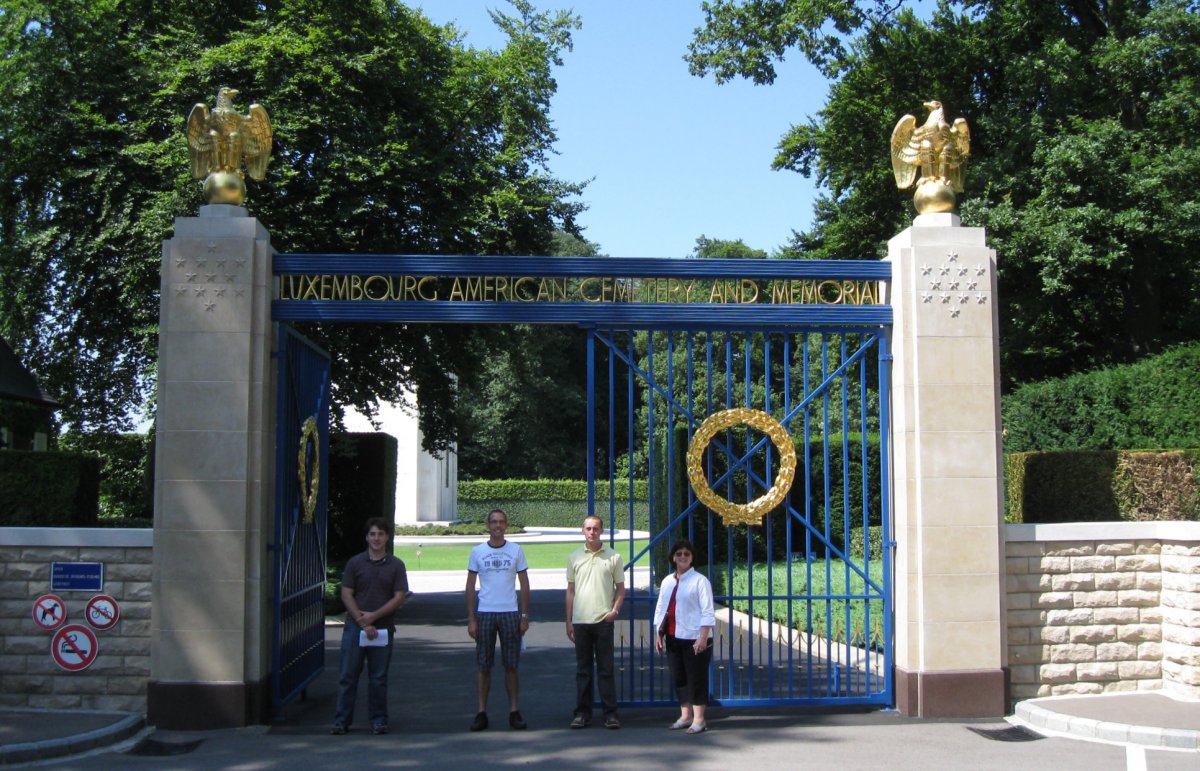
The gates of the cemetery are very impressive. In the photo below, left-to-right, are my son Billy (21), Daniel Reiland (USVFL), my son Robbie (22), and my wife Joan. (This photo was actually taken on the way out, but it goes great here :-)
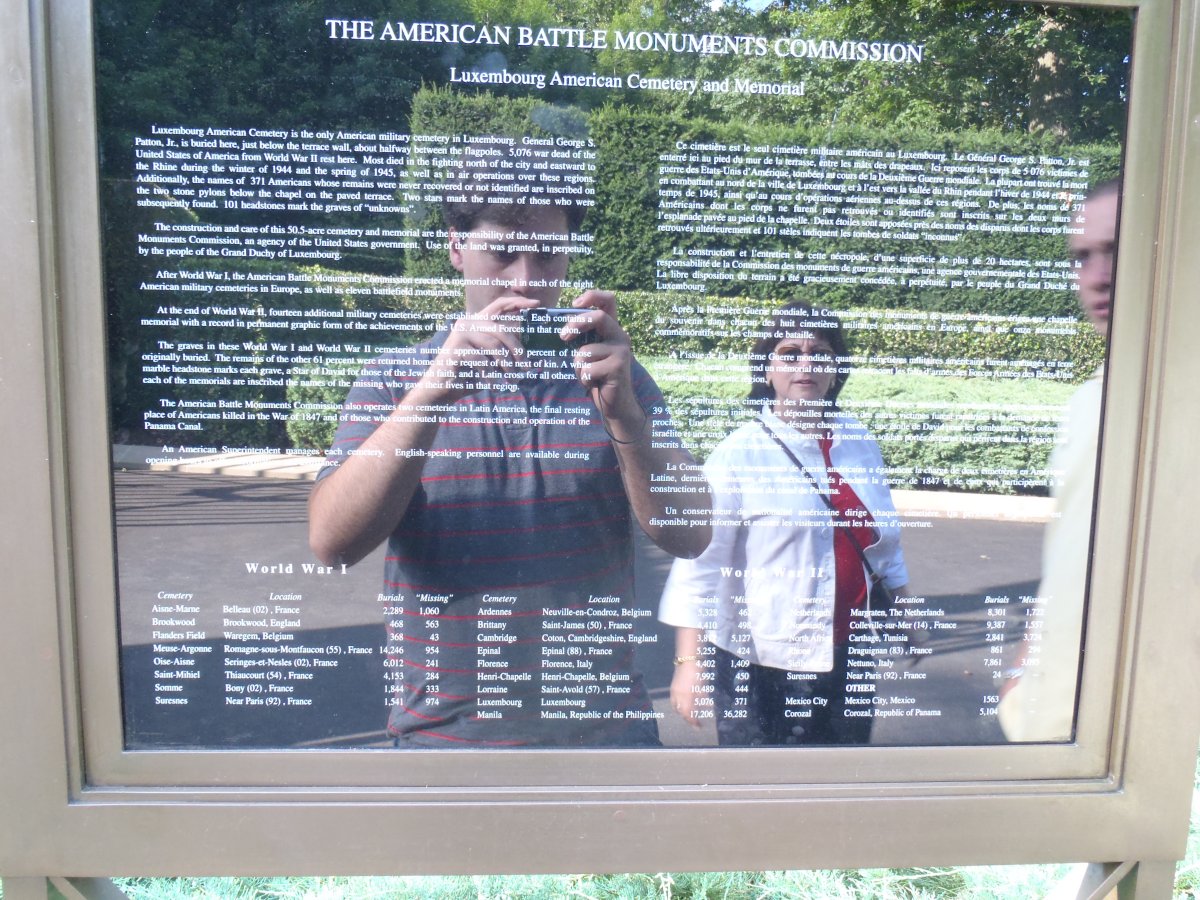
Once we went inside the gates, we visited the office where we met Erwin Franzen, Hamm cemetery Associate and Luxembourg citizen. Erwin was manning the office alone while the superintendent was visiting another American cemetery on business. Erwin, as Roger has reported from earlier visits is very knowledgeable and helpful, and he accompanied us outside to the monuments at the top of the cemetery, where he shared much history with us. Here we also met Nico Schroeder, an amateur historian and photographer who was about 10 years old during the liberation. Nico maintains photo albums at https://cantu1934.spaces.live.com.
After exploring the monuments
and the Tablets of the Missing,
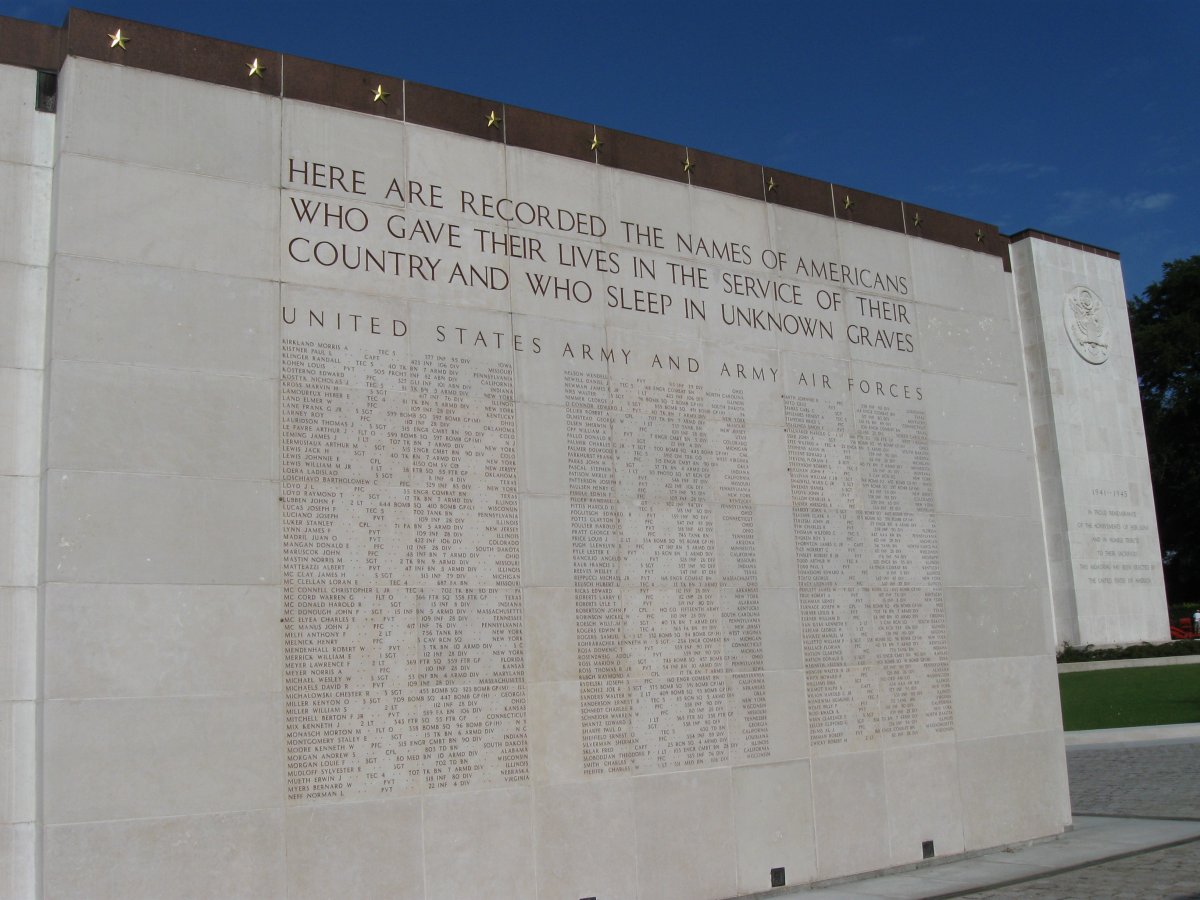
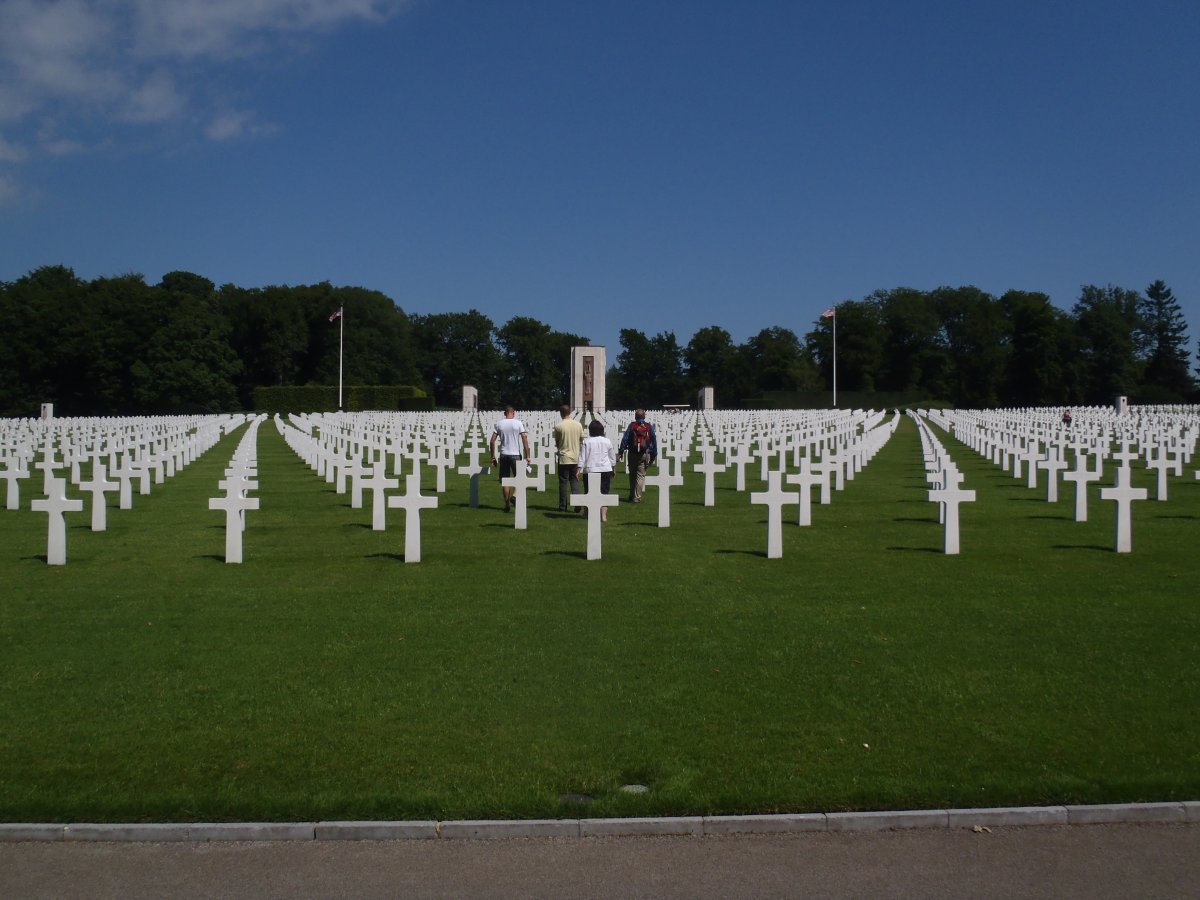
it was time to search out the Sixer grave sites. I should note that after growing up on war movies and TV shows like "Combat!" in the 1960s, and after spending 15 years reading about Super Sixer history, and generally studying World War II all my life in an abstract fashion, the sight of all these crosses in their rows really brings home the reality of WW II in a special way. Each one of those markers represents a young man in the prime of life, taken away in some horrible circumstance, far from home. If you ever have a chance to visit one of these cemeteries while traveling, I urge you to do so.
To photograph all the Sixer graves, we divided up into three camera teams covering different parts of the Cemetery.
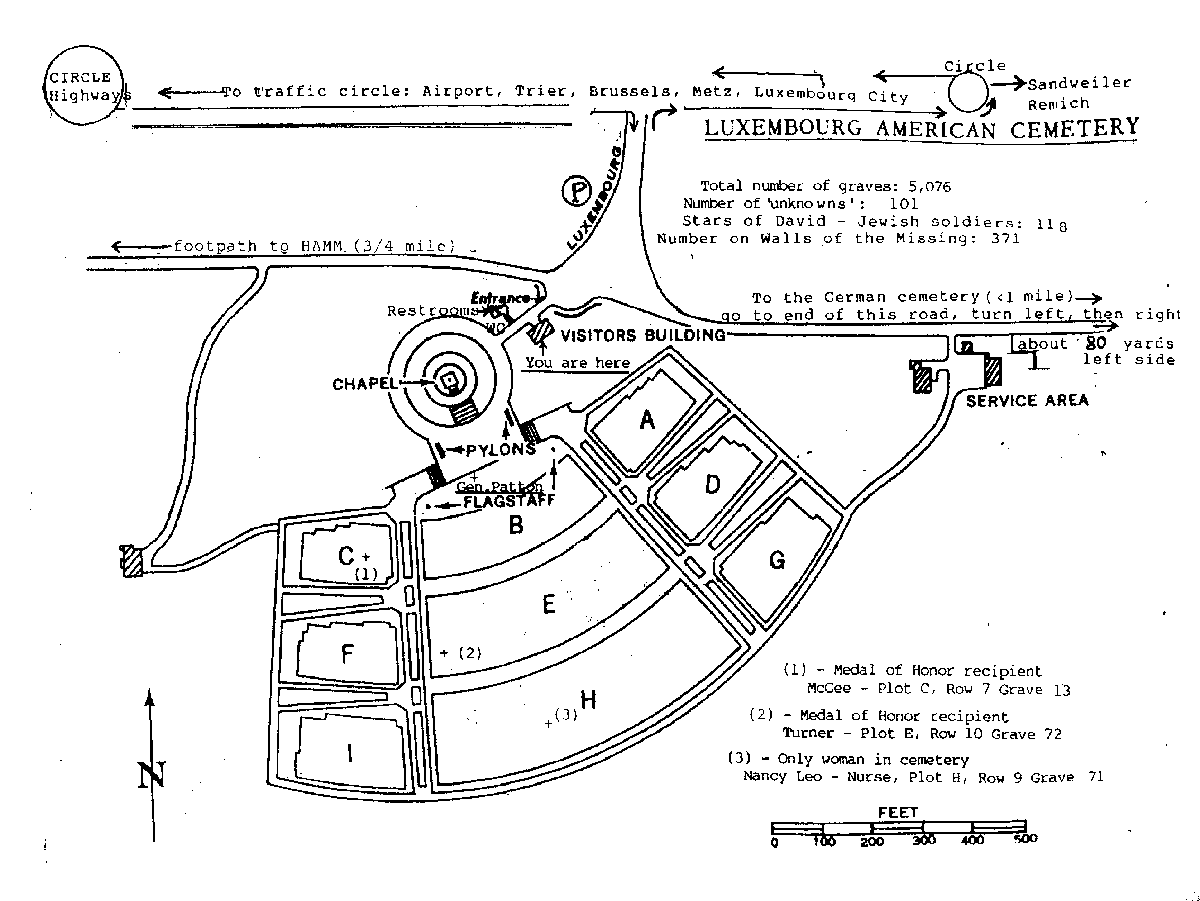
I handed out copies of the plot listings that I compiled before the trip ( https://www.super6th.org/cemeteries/6AD_ABMC_LX_BY_SECTION_AND_UNIT.pdf). My two sons each took a group of three sections (A, B, C, and D, E, F), with my wife assisting each of them, and Daniel and I took the third group of three sections (G, H, and I). This last set was so large that my sons had to help us finish up Section I. It was hot and humid, but the sky was clear blue, and within a couple of hours, we were done. Amazingly, I don't think we missed a single grave, and the results can be seen on the page I posted the weekend after I got back:
https://www.super6th.org/cemeteries/hamm/index.htm
While photographing in Section H, the largest section and near the end of our project, I came across the grave of Roger Connor's dad, George, who was killed on January 4, 1945, in Wardin, Belgium. I asked Daniel to take a special photo at that site.
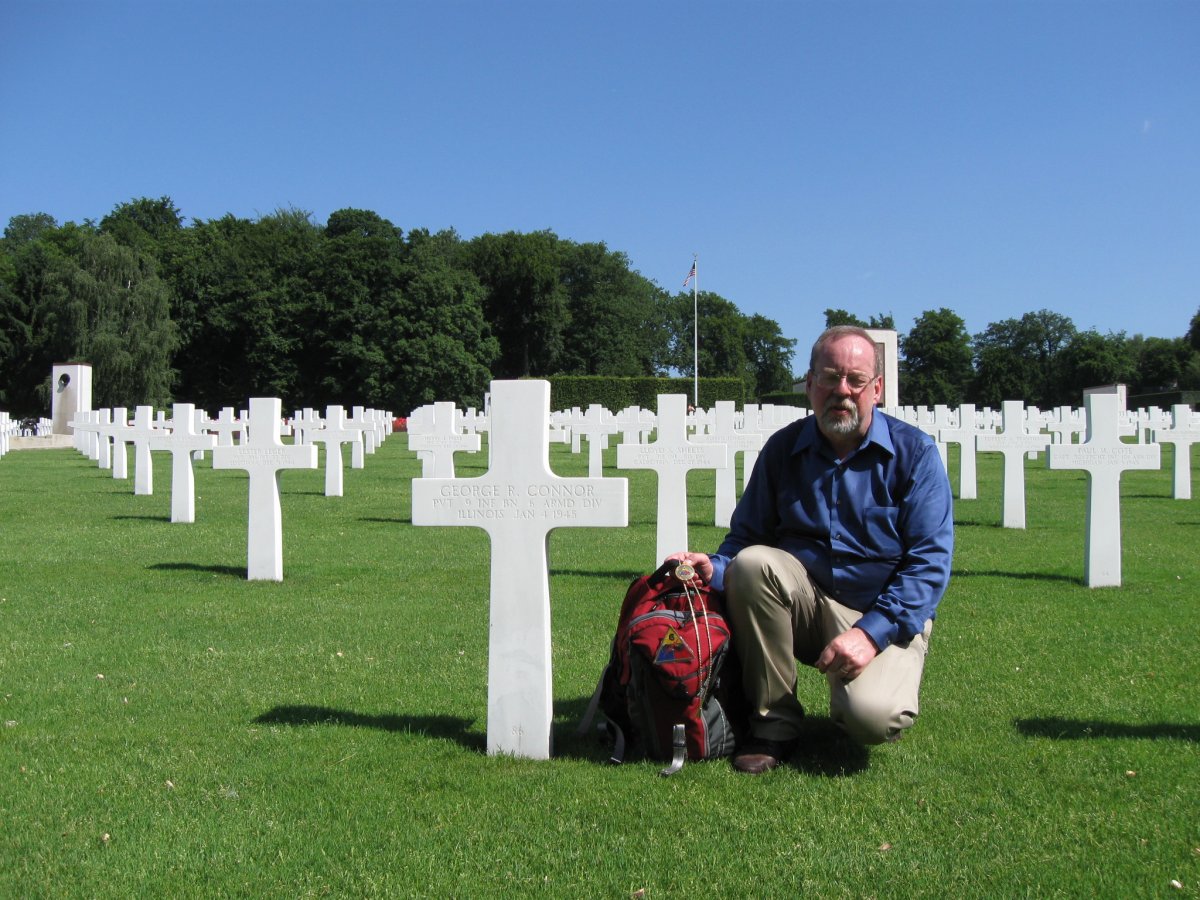
After two hours of traversing the cemetery in the hot sun, we all sat down and rested in the shade for a few minutes. Here's the crew cooling off:
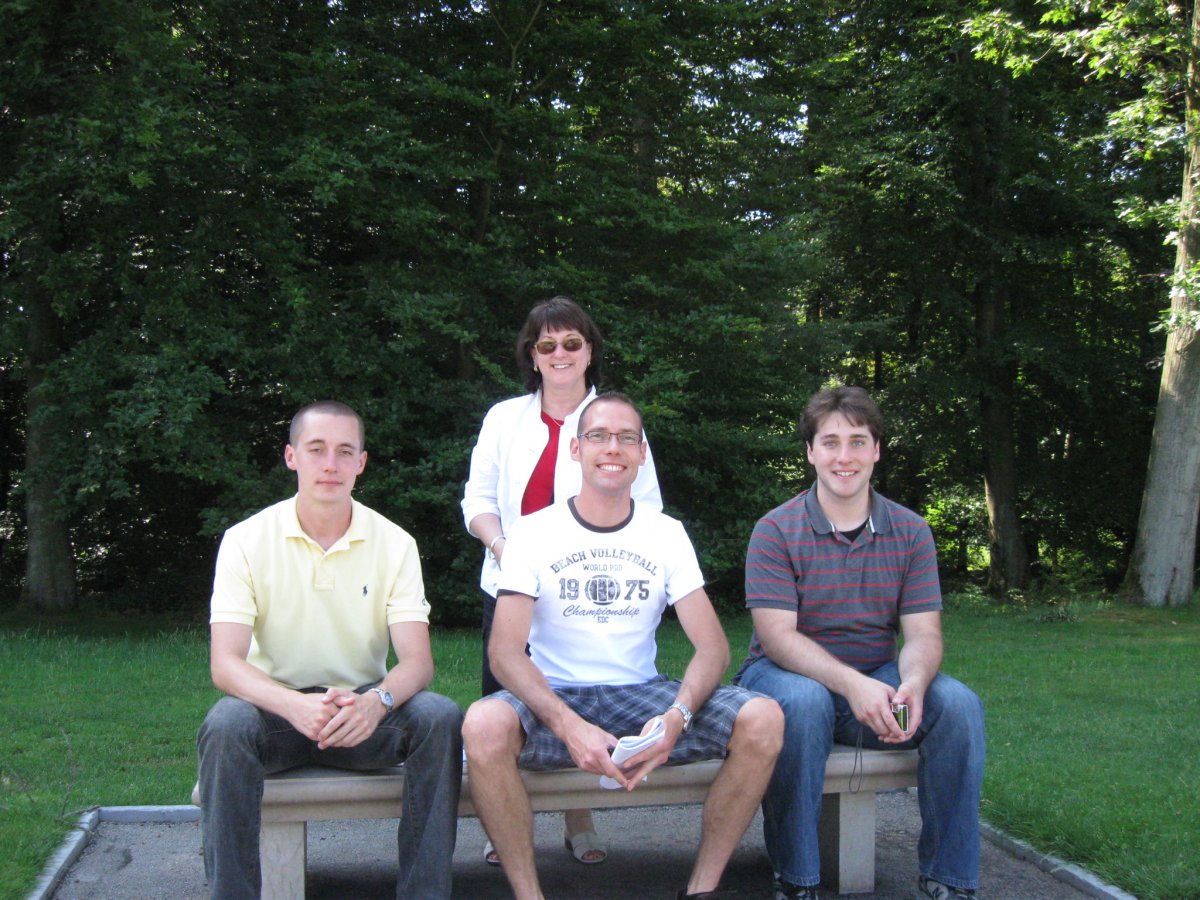
From left to right, that's Robbie, Joan, Daniel, and Billy.
Then it was time to head back and move on:
Wednesday around Noon, German Cemetery at Sandweiler
There is a German cemetery less than a mile down the road, and Daniel led us there after we left the American cemetery. Daniel and Erwin had filled us in on some of the history: the American graves registration teams had recovered both German and American remains after the Battle of the Bulge. The Luxembourg government granted land to the United States for burial grounds, and the American government created the Hamm cemetery for US soldiers, but also created a separate cemetery for German remains. At some point in the 50s, we turned over the German cemetery to the West German goverment.
The German cemetery is much more modest, and has a very dark, sad feel to it.
Here is the gateway onto the property:
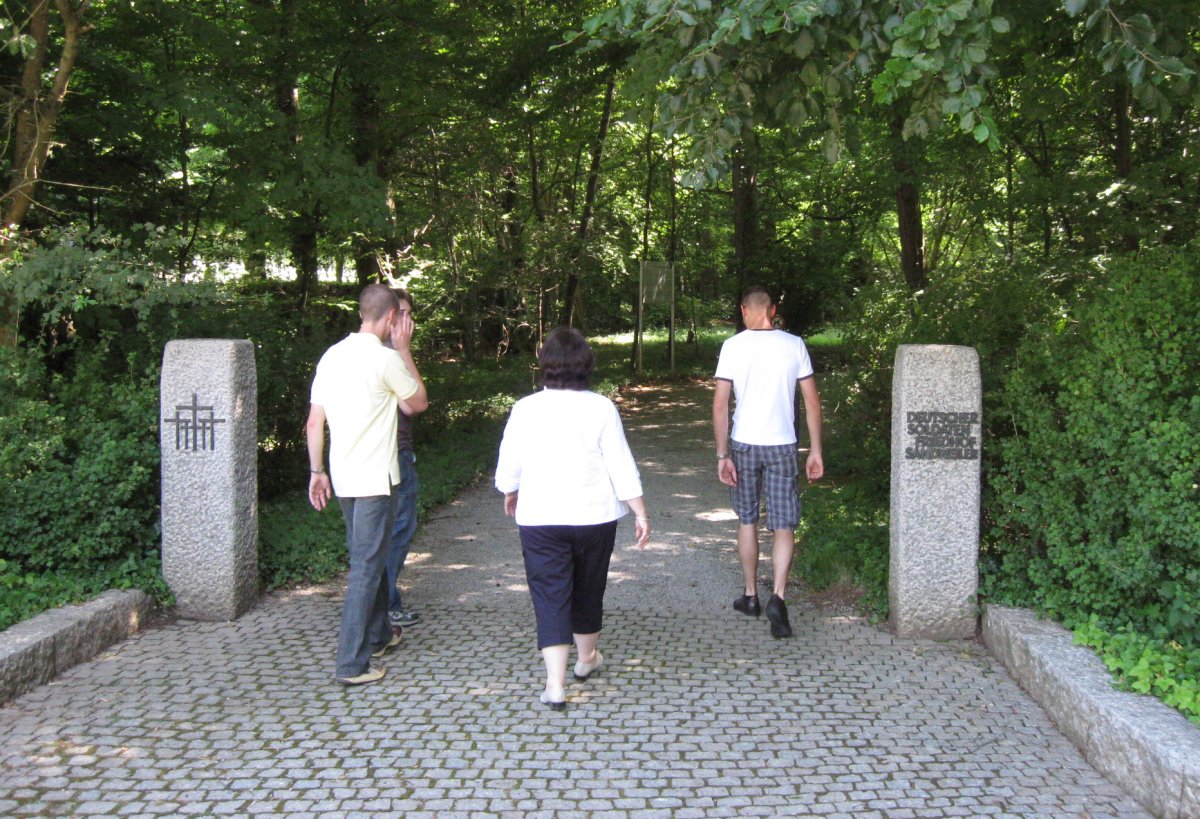
The gravesites are on the other side of a massive, dark stone wall with a single doorway:
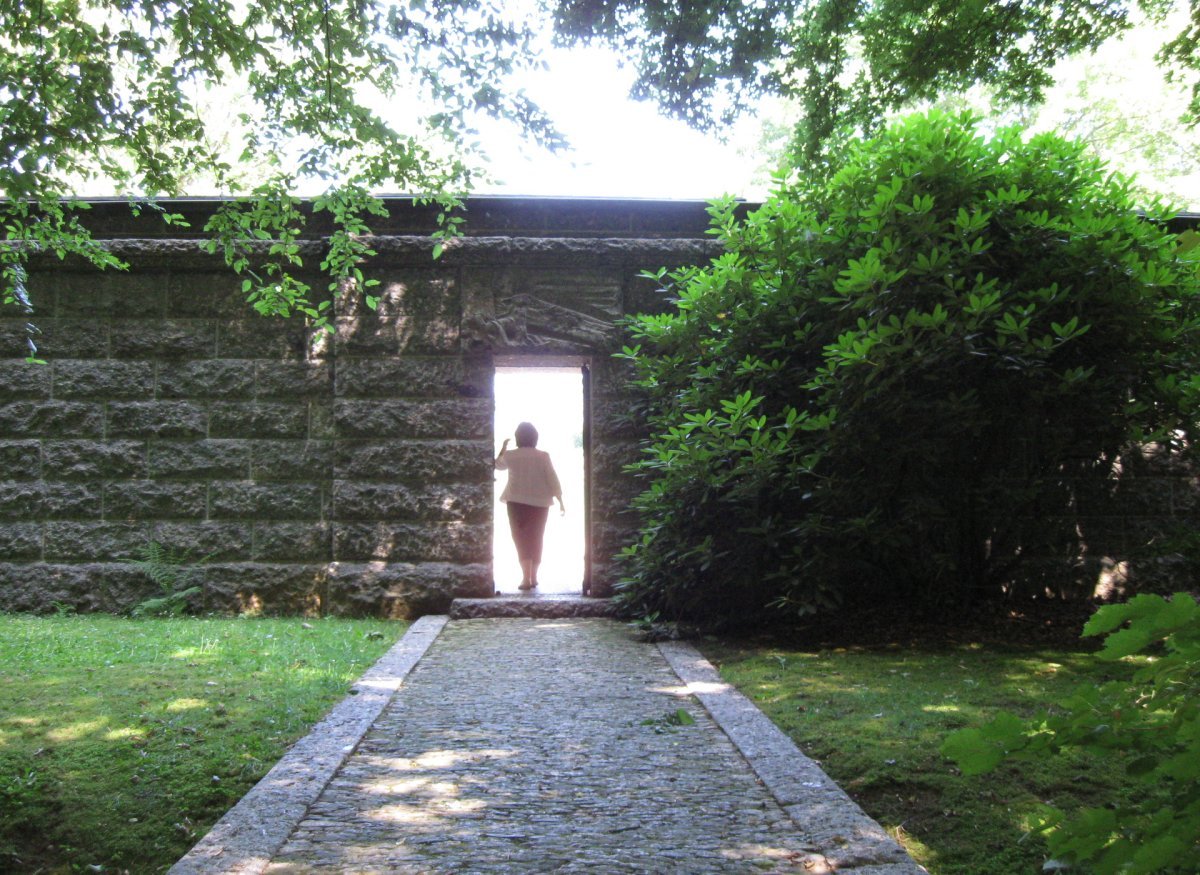
As you walk through, you see the grave stones arranged in front of you. Like the wall, they are constructed of dark stone:

Each stone marks four grave sites, two on each side. When known, the name of the soldier and his birth and death dates are provided. Often, the soldier is an unknown, and the engraving simply reads "EIN DEUTSCHER SOLDAT", "A German Soldier".
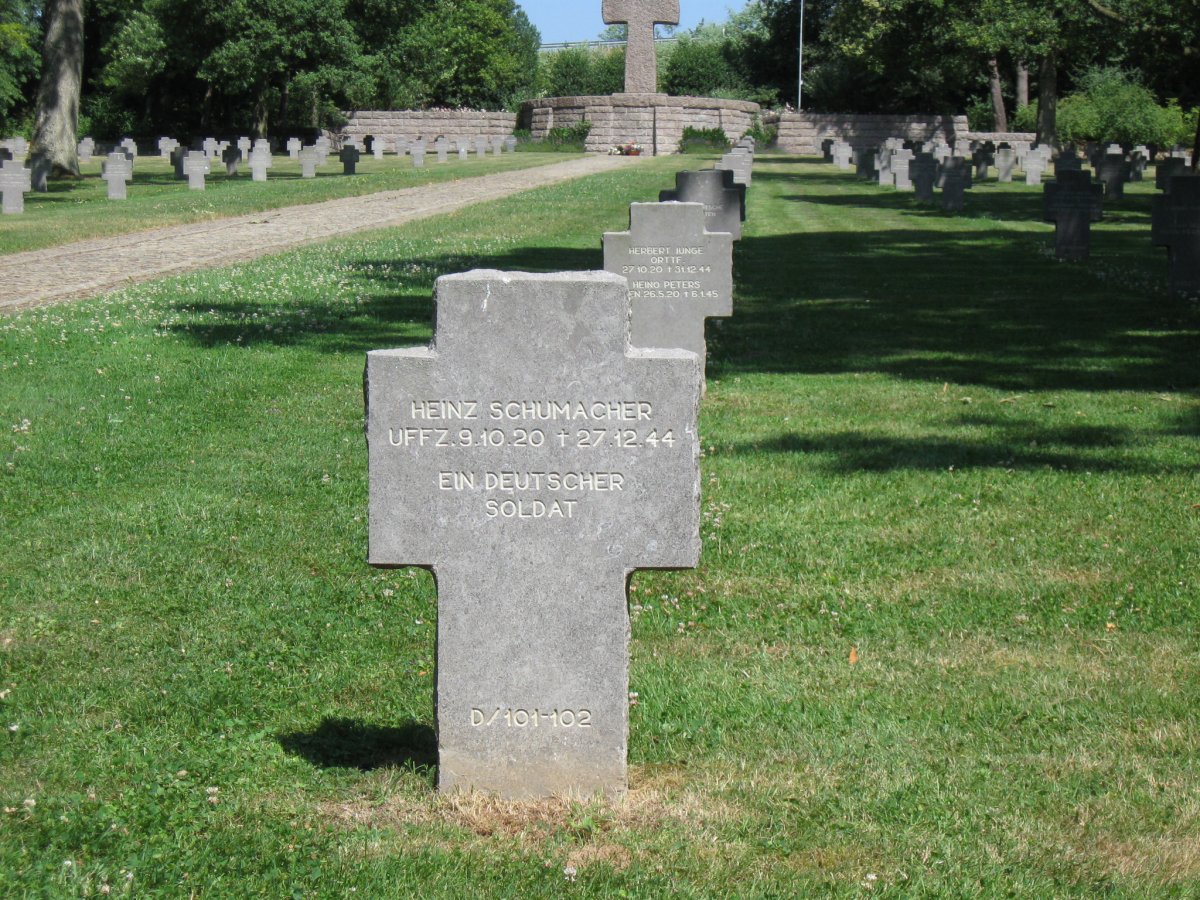
Often, both soldiers are unknown. And sometimes, both sides, front and back, are engraved with "ZWEI DEUTSCHE SOLDATEN". One marker, four unknown German soldiers:
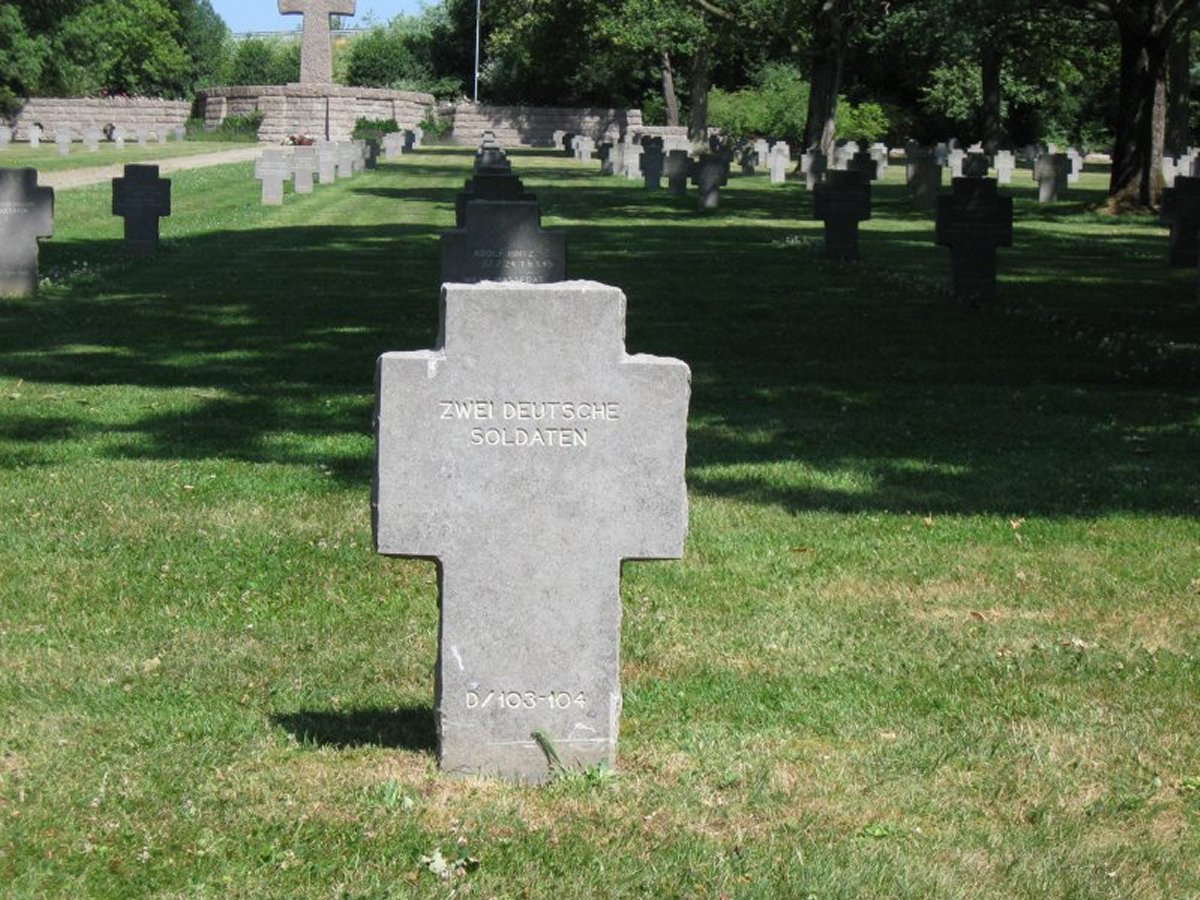
As I walked passed the markers, I noticed that one was for a soldier killed on January 4, 1945, the same day Roger Connor's dad died.
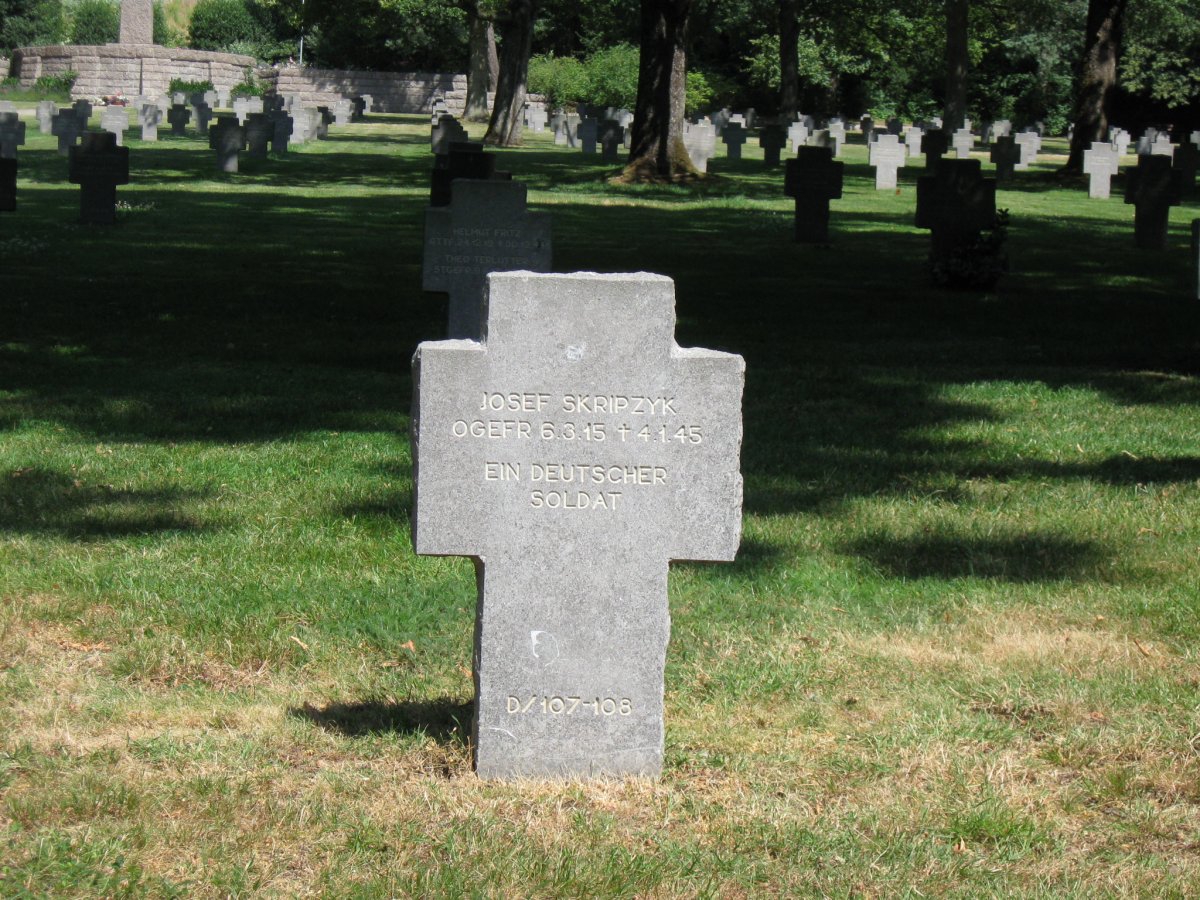
I was wondering if I would find one from that day. It didn't take long. January 4, 1945 was a bad day for young German soldiers, too.
Daniel told us that although the German border is only several miles away, these graves receive relatively few visitors compared to the American cemetery down the road.
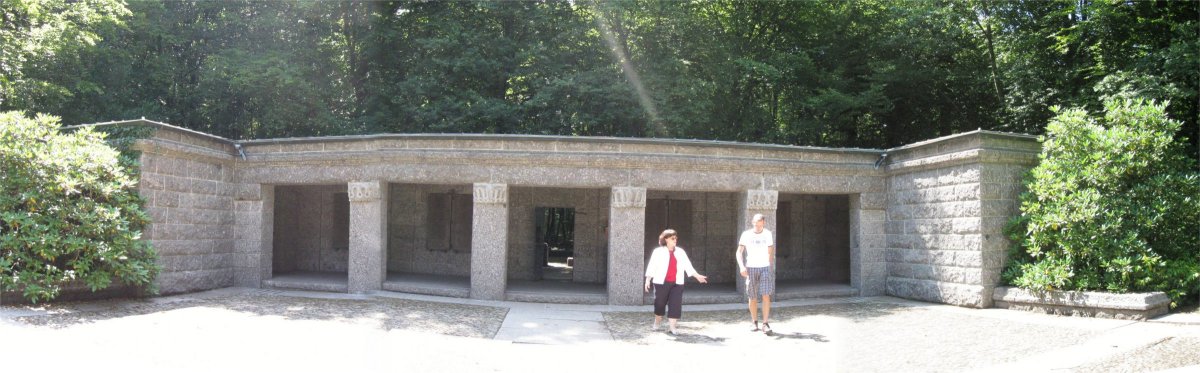
As you turn around to leave, you discover that the large wall through which you entered contains plaques and little rooms.
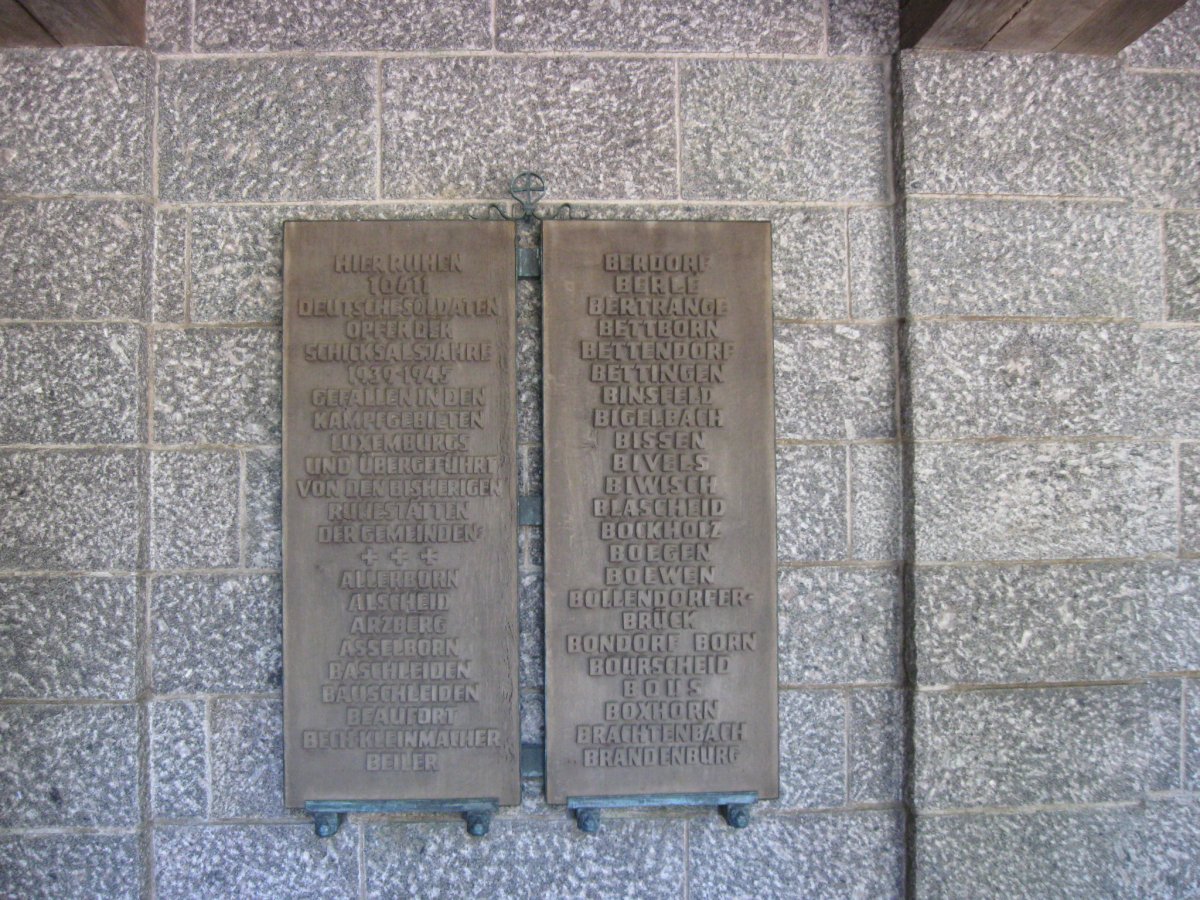
The plaques list the German towns from which the soldiers came:
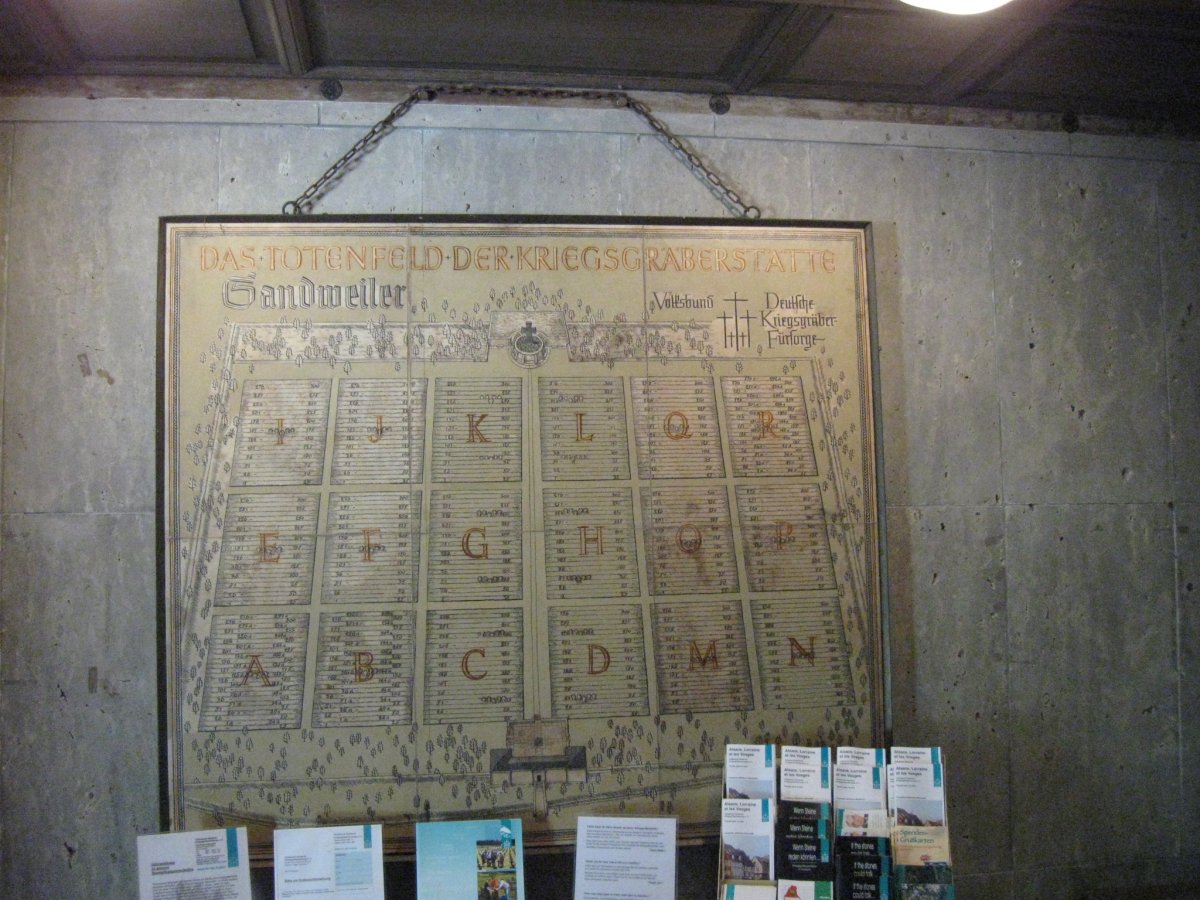
The rooms contan plot maps and informational brochures.
In the parking lot as we left, I noticed a number of vehicles. None seemed to be for any visitors. They were mostly drivers looking for a shaded place to park and perhaps eat lunch.
Day 1, AM |
Day 1, PM |
Day 2